
10 فوائد لمشاريع Agile
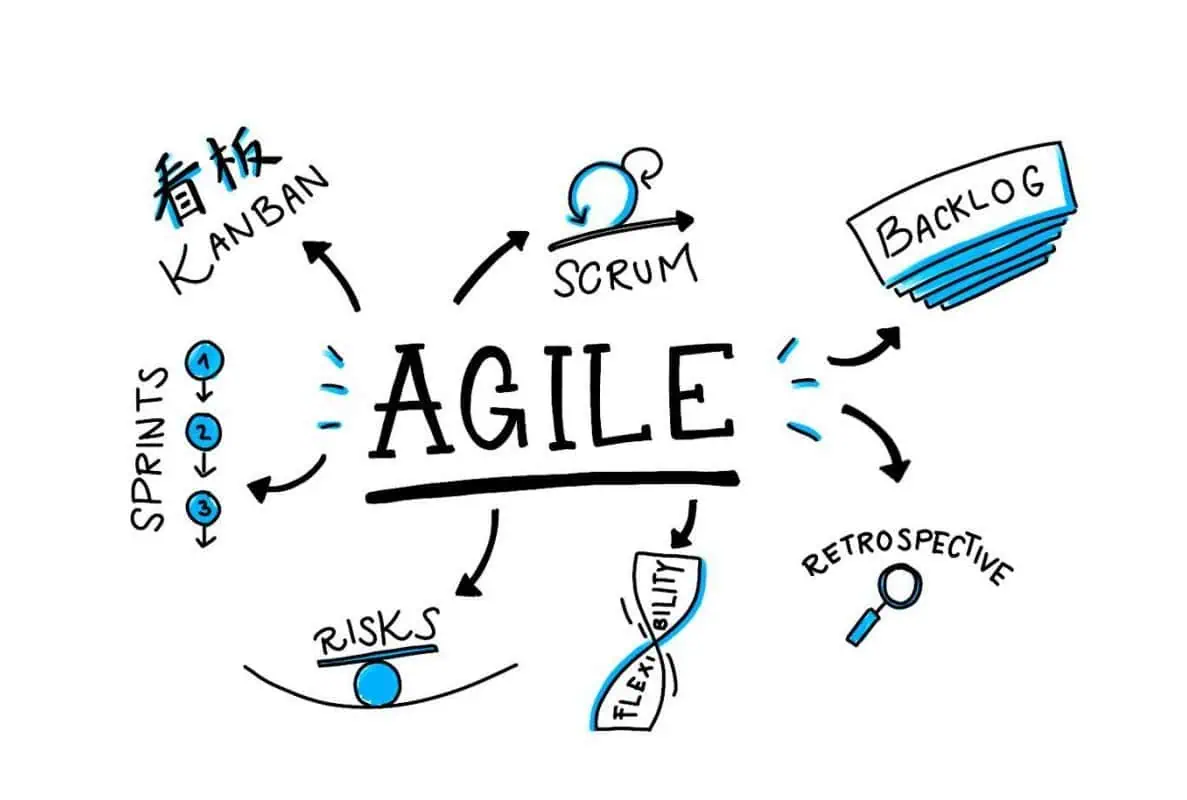
Do you think agile project management application is right for you? Do you really need more agility in managing your projects? Here are ten benefits of agile project management, let's get to know them together
Agile projects are faster
After one week of Agile project management you would have to update the system daily, as opposed to the monthly updates of waterfall project management. In waterfall the system can wait even months to be revised. You can take risks With agile project management you can react to changing situations quickly and easily. In waterfall you are usually fixed, maybe you don't know what can be delivered by the deadline and what not. Also when you prepare your project you keep on tweaking it until the deadline. As an example: a bug was found during the bug-fixing stage. What do you do now? Do you delay the release to fix the bug or do you just release the application? In waterfall you are forced to wait until the bug is fixed.
Agile projects are more cost-effective
Your project's fixed costs are much less expensive when all phases of the project are executed in an agile mode. Fixed costs are monthly salaries, office space rental, the maintenance of the project team, etc. Due to the fact that the resource management is a set of daily activities, and not only a monthly business analysis that is the task of many project managers in the company, the costs are significantly lower. Moreover, the decrease in costs is more than just the reduction of total payroll expenses. One can clearly see that the reduction of fixed costs is even more meaningful because it directly leads to lowering the overall costs of the project, but also to lower costs of operations and workforce costs.
Agile projects are more innovative
Many IT managers think project management is just about assembling a project management office with big computers, a dedicated project manager, and a staff. The truth is, IT managers need to create an innovative project management office, along with an agile project management office. Agility in project management is not an end goal, it is the beginning of a journey. 1. Outcomes are in focus, not bugs and kinks A typical project management office is focused on coming up with the outcome, on meeting budget, or meeting timeline. In agile projects, the outcome and the milestones are the top priority. But what about the bugs, kinks and other performance issues? A typical project manager thinks bugs are a feature, not a bug. In an agile project, bugs are important, they have to be fixed.
Agile projects are more responsive to change
Traditionally in projects one person plans and another one makes a reality, which can take lots of time. But an agile project is more flexible. Each team member is responsible for completing a feature and the whole team plans, implements, reviews and can adjust as well as every day starts in a fresh start. That is why agile project is more likely to go over budget. Here is an example of the same project, but the first one is the non-agile one. This project was not agile at all, and has been running for more than two years. The project team seems not to understand each other. The developers are working very slow, not the product managers are concerned. The last time, the product managers wanted to increase the budget from 5.7 to 6.5 million dollars, which would cover a 3.
Agile projects are more resilient
First, it is important to note that agile projects are more resilient than traditional projects. Traditional projects suffer from a single-way flow and a non-adaptive project approach that becomes costly and time consuming over time. In addition to that, traditional projects take too long to complete and typically fails to follow through with the targets set in the beginning of a project. For a company that has already made investments in its innovation pipeline, agile projects are considered by most to be the best way to go forward. Agile projects are more cost effective Let's face it; Agile projects are more cost effective compared to traditional projects, because the agile project manager takes care of more aspects of a project.
Agile projects are more collaborative
This aspect is paramount to being a successful project manager. Managers who think in terms of silos are sure to end up with more failed projects. People are attracted to groups who are collaborative. If they are not, they may opt to leave that group. Management gives a chance to improve Managers who are nimble enough to recognize the need for improvements (and are allowed to make them) are likely to end up with a better product. The organization's goal is to produce the best possible product that meets the needs of customers, not to create the most attractive product. It is the aim of management to ensure that is the case.
Agile projects are more flexible
All the processes in an organization are already done in a highly imperfect way. All team members know the weak points of the project they are working on. This is why projects are so tough to complete. You can work within the confines of any project flawlessly. This will allow you to complete tasks without much effort and time. An agile project gives the freedom to complete the tasks in a more time-efficient manner than in the usual project management. You will be working according to the changing needs of your project. The deliverables should always match the evolving needs of your project and always. This can help improve the quality of work as well. An agile project is more likely to achieve more time-bound goals It is not that there is not much time left in the project.
Agile projects are better for the environment
Today, business environments are significantly changing. They have become more complex, and communication gaps and inefficiencies are rapidly increasing. Agile projects provide their teams the best opportunity to optimize their business process and projects. Agile projects create positive change A change is also an opportunity. By implementing an agile approach to project management, you can significantly reduce project inefficiencies, while increasing your team's productivity and results. In addition, the tooling and infrastructure needed to work effectively in an agile way can be more easily adopted and implemented.
Agile projects are better for the workforce
Nobody likes meetings – especially not managers. Meetings require coordination, hard work, and creativity – and they drain productivity. If we add all the time required for changing your mind about a project in progress, and developing a culture that accepts failure, you have more than 10 wasted hours for every hour spent on a meeting. Agile project management allows for better workflows and communication, which in turn help team members connect and engage more. Imagine how much more time you could spend on value-creating tasks like identifying your business problems and applying agile methods to solving them. Agile projects improve project cost Most of us would prefer to work for as little as possible, yet expect that we will be paid for our efforts.
Conclusion
Agile project management is growing tremendously; every project team is looking for ways to improve their processes. Learn how you can improve your project management processes with these tips. We hope this article has helped you in answering some of the questions you may have. Share your own insights with us in the comments section.