
How to apply the Lean methodology to reduce waste in projects
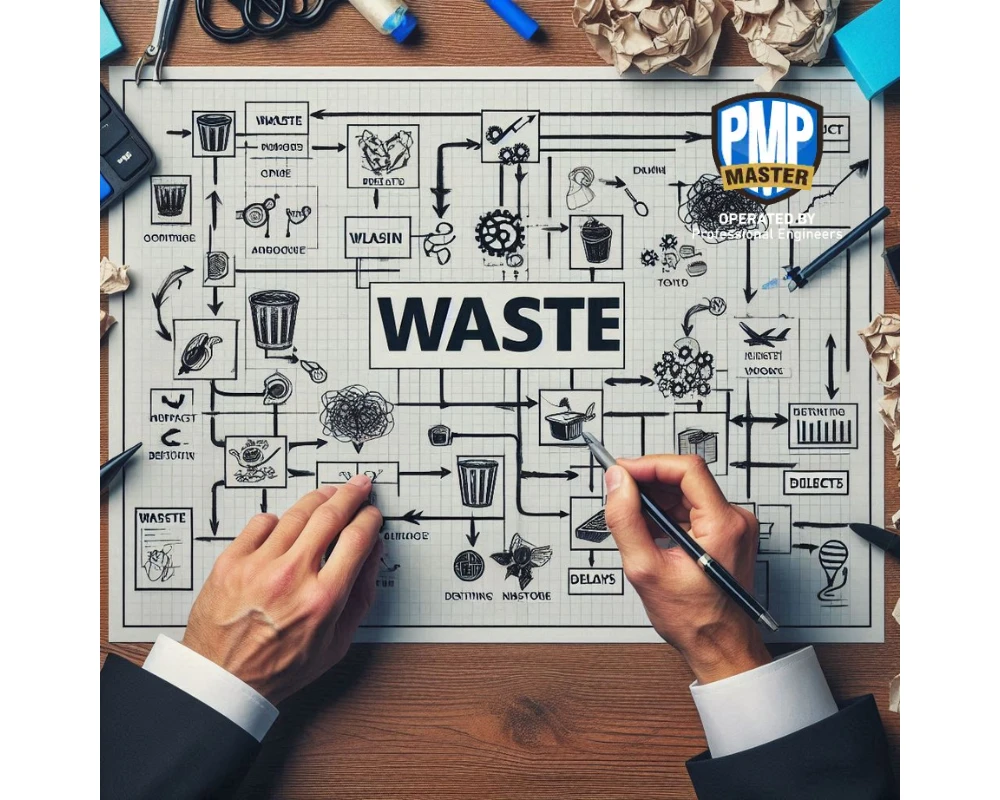
Stop Draining Resources and Start Delivering More Value
- Introduction: The Hidden Drain on Your Projects
Are your projects constantly battling missed deadlines, creeping scope that adds little real value, or budgets stretched thin? Do your teams feel frustrated, bogged down by rework, or stuck waiting for approvals? These aren't just isolated incidents; they're often symptoms of a deeper issue – waste. It's the hidden drain silently sabotaging your project's success, consuming time, money, and morale.
But what if there was a proven way to systematically identify and eliminate this waste? Enter the Lean methodology. Born on the factory floors of Toyota, Lean isn't just for manufacturing anymore. It's a powerful philosophy and a practical set of tools focused on maximizing customer value while relentlessly minimizing everything else – the waste. Applied correctly, Lean principles can transform how you manage projects, shifting the focus from simply being busy to being truly effective.
This guide will equip you with the knowledge and techniques to apply Lean thinking to your projects. You'll learn to recognize the specific types of waste that plague project environments, discover practical Lean tools to combat them, and understand how to implement these changes for tangible results. Get ready to run leaner, faster, and more successful projects.
- Understanding the Enemy: What is "Waste" in a Project Context?
At the heart of Lean is a simple dichotomy: Value vs. Waste. Value is anything the customer or key stakeholder is actually willing to pay for or deems essential. Waste (or Muda in Japanese) is everything else – any activity that consumes resources but adds no corresponding value from the customer's perspective.
While Lean originated in manufacturing, its principles translate surprisingly well to the knowledge work of projects. The key is learning to spot the "8 Wastes" in your project environment. Let's break them down using the common DOWNTIME acronym:
- D - Defects: Effort spent correcting errors.
- Project Examples: Fixing software bugs, rewriting incorrect documentation, clarifying misunderstood requirements after work has started, rework due to poor quality inputs.
- O - Overproduction: Producing more than is needed, sooner than needed, or faster than needed.
- Project Examples: Developing features nobody asked for or uses, writing overly detailed reports that aren't read, starting multiple tasks simultaneously without clear priority or capacity, building excessive "just-in-case" functionality.
- W - Waiting: Idle time caused by delays in the workflow.
- Project Examples: Waiting for approvals, sign-offs, information from other teams or stakeholders, resource availability, dependent tasks to be completed, slow system responses.
- N - Non-Utilized Talent: Failing to leverage the skills, knowledge, and creativity of the team.
- Project Examples: Assigning highly skilled members to mundane tasks, micromanagement stifling initiative, lack of training or empowerment, poor communication leading to disengagement, team members waiting for work due to bottlenecks elsewhere.
- T - Transportation: Unnecessary movement of information or deliverables.
- Project Examples: Excessive handoffs between teams or individuals, inefficient communication channels (e.g., relying solely on email chains for complex issues), moving data between incompatible systems manually, physically moving documents around for signatures.
- I - Inventory (Work-in-Progress - WIP): An excess of work started but not completed.
- Project Examples: A large backlog of partially finished tasks or features, excessive documentation piling up before it's needed, too many requirements defined far ahead of development capacity, code branches waiting for integration. High WIP often hides other problems like bottlenecks and defects.
- M - Motion: Unnecessary movement of people.
- Project Examples: Constantly searching for information in disorganized shared drives or emails, excessive clicking through poorly designed software tools, frequent context switching between unrelated tasks, attending unnecessary or poorly structured meetings, physically walking around to find people or resources.
- E - Extra-Processing (Over-processing): Doing more work than necessary to meet the requirement.
- Project Examples: "Gold-plating" features with unnecessary complexity, overly elaborate design documents for simple components, multiple layers of review and approval for low-risk items, using complex, expensive tools for simple tasks, generating metrics nobody uses.
Take a moment. Think about your current or recent projects. Where do you see these wastes cropping up most often? Recognizing them is the first crucial step.
III. The Lean Toolkit for Project Waste Reduction
Identifying waste is essential, but eliminating it requires action. Lean provides a powerful toolkit of techniques specifically designed to streamline processes and reduce Muda. Here are some of the most effective tools for project environments:
- Value Stream Mapping (VSM):
- What it is: A technique to visualize the entire flow of work required to deliver value (e.g., from a customer request to a delivered feature). It maps activities, handoffs, information flow, and crucially, wait times and potential waste points.
- How it helps: VSM makes the invisible visible. It highlights bottlenecks, delays (Waiting), excessive handoffs (Transportation), and areas where non-value-added steps occur (Extra-Processing). Even a simplified VSM can spark powerful conversations about process improvement.
- Kanban / Visual Management:
- What it is: Using visual boards (physical or digital) to represent the workflow stages (e.g., To Do, In Progress, Testing, Done). Work items (tasks, features) move across the board as they progress. Crucially, Kanban emphasizes limiting Work-in-Progress (WIP) for each stage.
- How it helps: Visualizing work prevents tasks from getting lost and makes bottlenecks immediately obvious (Waiting). Limiting WIP is a cornerstone of Lean flow – it reduces Inventory, prevents Overproduction, shortens lead times, improves focus, and often exposes underlying quality issues (Defects) faster.
- Kaizen / Continuous Improvement:
- What it is: The philosophy of ongoing, incremental improvement involving everyone. In projects, this often manifests as regular Retrospectives (common in Agile) or dedicated process improvement sessions.
- How it helps: Kaizen fosters a culture where waste identification and elimination become routine. It empowers teams (addressing Non-Utilized Talent) to identify problems (like Defects or Motion) and experiment with solutions, leading to sustained efficiency gains.
- The 5 Whys:
- What it is: A simple but powerful root cause analysis technique. When a problem occurs, you ask "Why?" repeatedly (typically five times) to drill down past the symptoms to the underlying cause.
- Example: Problem: The user guide was delivered late. 1. Why? The final review took too long. 2. Why? The reviewer didn't have all the necessary screenshots. 3. Why? The testing environment wasn't ready on time. 4. Why? There was a delay in deploying the latest build. 5. Why? A critical server configuration wasn't documented. (Root cause: Poor configuration management).
- How it helps: Prevents recurring problems (Defects) by addressing the source, rather than just patching symptoms.
- Standardization:
- What it is: Defining and documenting the best-known way to perform a task or process currently.
- Project Examples: Using standard templates for user stories or bug reports, establishing a clear "Definition of Done" (DoD) for tasks, using checklists for common processes (like deployment), agreeing on communication protocols.
- How it helps: Reduces ambiguity, variation, and the likelihood of errors (Defects). It saves time spent reinventing the wheel (Motion, Extra-Processing) and provides a baseline for future improvement (Kaizen).
These tools aren't mutually exclusive; they often work best in combination, tailored to your specific project context.
- Putting Lean into Action: A Practical Implementation Roadmap
Applying Lean isn't about a massive, disruptive overhaul overnight. It's a journey of continuous improvement. Here’s a practical roadmap to get started:
- Step 1: Identify Value (Clearly!): Before you cut anything, be crystal clear on what constitutes value for this specific project from the perspective of your customer and key stakeholders. What outcomes are they truly seeking?
- Step 2: Map the Current State: Choose a key project process that feels inefficient (e.g., requirement clarification, bug fixing, feature deployment). Work with the team to create a simple visual map (like a basic flowchart or simplified VSM) showing the steps, handoffs, and estimated times.
- Step 3: See the Waste: Analyze your map and talk to the team. Use the DOWNTIME framework as a lens. Where are the delays? Where is rework common? Where are people waiting? Where are skills underutilized? Be honest and objective.
- Step 4: Target & Experiment: Don't try to fix everything at once. Pick 1-2 significant wastes that seem most impactful or easiest to address. Select an appropriate Lean tool (from Section III) and design a small, low-risk experiment. Example: "To reduce Waiting and high WIP (Inventory), let's try implementing a WIP limit of 3 'In Progress' items per person on our digital Kanban board for the next two sprints."
- Step 5: Measure & Refine: How will you know if your experiment worked? Define simple metrics (e.g., average task completion time, number of defects found late, team satisfaction). Track the results, discuss them in your retrospectives, and decide whether to adopt, adapt, or abandon the change.
- Step 6: Foster a Lean Culture: This is crucial for long-term success. Encourage open communication about problems (without blame). Empower team members to suggest improvements (addressing Non-Utilized Talent). Celebrate small wins. Ensure leadership understands and supports the Lean principles and provides teams the space to experiment and learn.
- The Payoff: Benefits Beyond Just Efficiency
Implementing Lean principles in your projects isn't just about cutting waste for its own sake. The benefits ripple outwards, creating a more effective and sustainable project environment:
- Reduced Costs: Less rework, fewer errors, and optimized resource use directly impact the bottom line.
- Faster Delivery Cycles: Streamlining flow and reducing delays means shorter lead times from idea to value delivery.
- Improved Quality & Reduced Risk: Focusing on preventing defects and standardizing processes leads to higher quality outcomes and fewer surprises.
- Increased Team Capacity & Morale: Eliminating frustrating waste frees up team members to focus on valuable work, boosting engagement and reducing burnout (tackling Non-Utilized Talent).
- Enhanced Customer/Stakeholder Satisfaction: Delivering value faster and more reliably leads to happier customers and stakeholders.
- Greater Predictability: Smoother workflows and reduced variability make project timelines and outcomes more predictable.
Remember those initial frustrations – the missed deadlines, budget overruns, and team stress? Lean provides a direct path to alleviating them by tackling the root causes embedded in wasteful processes.
- Conclusion: Start Your Lean Project Journey Today
Waste is the invisible anchor dragging down too many projects. By adopting a Lean mindset and utilizing its practical tools, you can systematically identify this waste, eliminate it, and unlock significant improvements in efficiency, speed, quality, and team satisfaction.
It’s not about working harder; it’s about working smarter and focusing relentlessly on delivering value. The journey starts with awareness. Look at your projects through the lens of the 8 Wastes. Talk to your team.
Don't feel overwhelmed. Start small. Pick one type of waste you see frequently and brainstorm ways to reduce it. Try implementing a simple visual board for your team's tasks. The next time a problem occurs, try asking the "5 Whys."
Lean isn't a rigid dogma; it's a continuous improvement philosophy that empowers teams to take control of their processes and build better ways of working. Begin your Lean project journey today – your future projects (and your team) will thank you.
Frequently Asked Questions (FAQs) on Applying Lean Methodology to Reduce Project Waste
- What is Lean methodology, and how does it apply to non-manufacturing projects?
Lean methodology focuses on maximizing customer value by eliminating waste (Muda) in processes. Originally from Toyota’s manufacturing system, it’s now widely used in software development, construction, healthcare, and knowledge work. Lean principles like value stream mapping and continuous improvement (Kaizen) help streamline workflows, reduce delays, and improve efficiency in any project context .
- What are the "8 Wastes" in projects, and how can I identify them?
The 8 Wastes, summarized by the DOWNTIME acronym, include:
- Defects (errors requiring rework),
- Overproduction (unnecessary deliverables),
- Waiting (delays in approvals or resources),
- Non-utilized talent (underused skills),
- Transportation (inefficient handoffs),
- Inventory (excess work-in-progress),
- Motion (unnecessary physical/mental effort),
- Extra-processing (overcomplicating tasks). Example: Excessive documentation (Overproduction) or delayed approvals (Waiting) are common in projects .
- How can Value Stream Mapping (VSM) help reduce waste?
VSM visualizes the end-to-end workflow, highlighting bottlenecks, delays, and non-value-added steps. For instance, mapping a software development process might reveal redundant approval layers (Extra-processing) or handoffs between teams (Transportation). This clarity enables targeted improvements .
- What is the role of Kanban in Lean project management?
Kanban uses visual boards to track tasks and limit work-in-progress (WIP). This reduces multitasking, exposes bottlenecks (e.g., tasks stuck in "Waiting"), and improves flow. For example, limiting WIP to 3 tasks per team member prevents overload and accelerates delivery .
- How does the "5 Whys" technique address root causes?
The 5 Whys drills into problems by repeatedly asking "Why?" until the root cause is found. For example:
- Problem: Missed deadline.
- Why? Delayed testing.
- Why? Incomplete requirements.
- Why? Stakeholder feedback was late.
- Root cause: No clear feedback timeline. This prevents recurring issues like defects or delays .
- Can Lean work in Agile or traditional project frameworks?
Yes. Lean complements Agile through tools like Kanban and retrospectives (Kaizen). In traditional frameworks, Lean principles like standardizing processes or reducing WIP enhance predictability and quality. Both approaches focus on iterative improvements .
- How do I start implementing Lean without overwhelming my team?
Begin with small, low-risk experiments:
- Use a Kanban board to visualize tasks.
- Conduct a 5 Whys analysis on a recurring issue.
- Hold a Kaizen session to eliminate one type of waste (e.g., reducing unnecessary meetings). Track metrics like task completion time or defect rates to measure impact .
- What are the key benefits of Lean for project teams?
- Faster delivery: Reduced bottlenecks and WIP shorten lead times.
- Cost savings: Less rework and resource waste.
- Higher quality: Standardized processes prevent defects.
- Improved morale: Teams focus on value-adding work, reducing burnout .
- How do I foster a Lean culture in my organization?
- Empower teams: Encourage ownership of process improvements.
- Promote transparency: Use visual tools like Kanban boards.
- Celebrate small wins: Recognize waste-reduction efforts.
- Lead by example: Managers should prioritize Lean principles and provide training .
- What are common pitfalls when adopting Lean?
- Overfocusing on tools: Tools like VSM are means, not ends. Prioritize mindset shifts.
- Ignoring human potential: Underutilizing team input leads to disengagement.
- Rigid adherence: Lean requires adaptability; avoid forcing "one-size-fits-all" solutions