
Integrating Sustainable Development Goals into Management Education
- Introduction
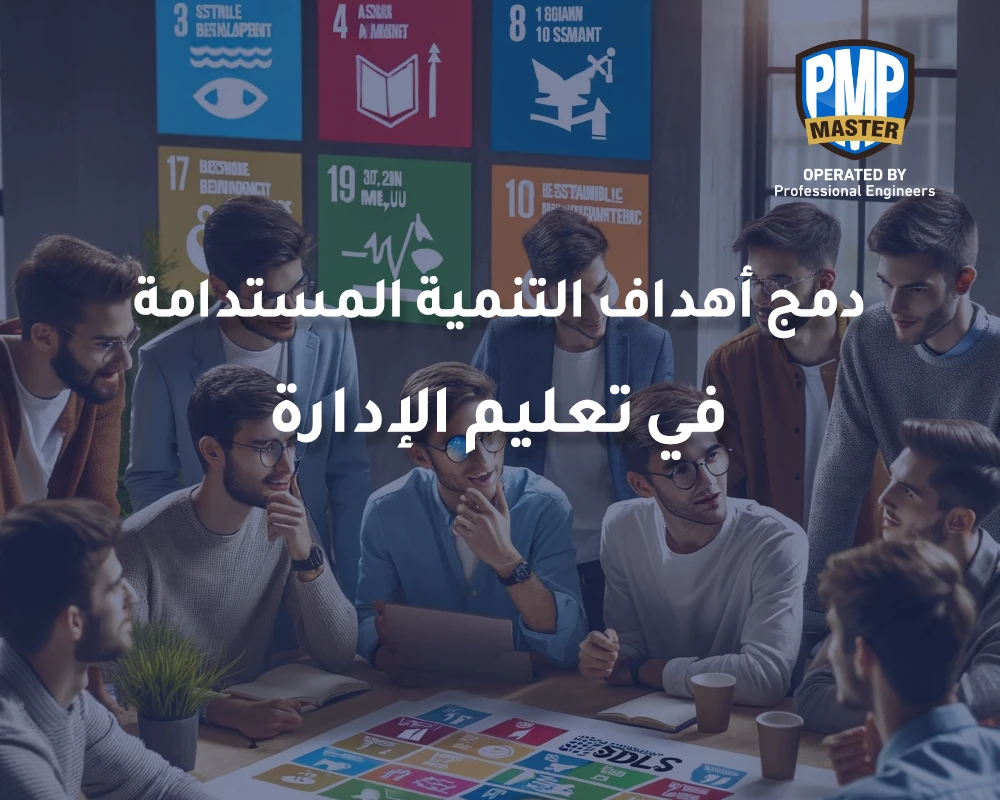
Sustainable development is a global imperative aimed at optimizing natural resources and enhancing society's interaction with the environment. The concept integrates social, environmental, and economic pillars to ensure well-being without compromising ecosystems. Central to this effort are the 17 Sustainable Development Goals (SDGs), ratified by the United Nations in 2015, designed to address the most pressing global challenges. Education is crucial for advancing sustainable development, and the SDGs emphasize education as a fundamental element. Management education plays a pivotal role in this context, shaping future leaders who will be responsible for implementing sustainable practices within organizations and society. This literature review explores the impact of integrating SDGs into management education on student behavior, examining existing research to identify key themes, points of agreement and debate, research gaps, relevant methodologies, and the overall development in this field.
- Sustainability in Management Education (SiME)
Sustainability in Management Education (SiME) is a framework that incorporates sustainability principles into management curricula. Its objective is to equip future leaders with the necessary knowledge, values, and attitudes to make informed decisions that consider environmental, social, and economic impacts. SiME addresses the triple bottom line, integrating environmental, social, and economic dimensions into management practices. This holistic approach is essential for achieving sustainable development, which requires a systems-thinking approach that considers the interconnectedness of natural systems and humanity’s role within them.
The four dimensions of the sustainability mindset—ecological worldview, systems thinking, emotional intelligence, and spiritual intelligence—provide a robust framework for integrating sustainability principles into education and professional practices. SiME is a strategy for implementing the SDGs by aligning educational curricula with these goals. This alignment promotes a holistic understanding of sustainability, encouraging future leaders to integrate the SDGs into their business practices. Living Labs (LLs) have emerged as hybrid frameworks that combine education and society, fostering collaborative environments to tackle sustainability concerns. While LLs offer experiential learning opportunities, they face challenges such as a disjointed focus, limited stakeholder engagement, and an overemphasis on quantifiable results, which can hinder their potential to facilitate comprehensive sustainability transformations.
III. The Role of the Principles for Responsible Management Education (PRME)
The Principles for Responsible Management Education (PRME), a United Nations Global Compact initiative, aims to transform business education by embedding principles that promote ethical leadership, sustainable development, and corporate responsibility across business school curricula. PRME’s core Seven Principles promote inclusive prosperity, organizational responsibility, and collaboration with stakeholders, while also embedding responsible management into curricula, research, and institutional governance. PRME influences the transformation of business education by urging institutions to adopt a wider social responsibility and equipping future managers to contemplate the long-term consequences of their decisions.
PRME signatories demonstrate progress in integrating sustainability into educational offerings and stakeholder engagement, fostering ethical decision-making, and encouraging responsible management practices. These institutions are more likely to adopt sustainability-related concepts, such as the SDGs, Environmental, Social, and Governance (ESG) principles, and Corporate Social Responsibility (CSR), compared to non-signatories. However, the limited representation of top-ranked business schools among PRME signatories suggests a potential gap in adoption by elite institutions, and there is a need for alternate frameworks to enhance the integration of sustainability into management education.
- Transformative Pedagogy for Sustainability
Transformative pedagogy for sustainability emphasizes experiential learning, reflective practice, and interdisciplinary approaches. Experiential learning engages students with authentic sustainability concerns, enabling them to formulate practical solutions and improve their critical thinking and problem-solving abilities. Reflective learning encourages students to critically interact with sustainability issues, connecting personal beliefs to broader societal objectives. These pedagogical methods foster a sustainability mindset by promoting contemplation and action. The Self-Reported Sustainable Behavior Scale (SRSB) is a tool used to measure the cognitive, affective, and conative dimensions of sustainability-related behavior. This scale provides insights into how students' attitudes and knowledge evolve after exposure to sustainability-focused projects, particularly in the context of the SDGs. The cognitive-affective-conative model suggests that teaching influences knowledge (cognitive) and attitudes (affective), which ultimately impact the behavior of future decision-makers.
- Methodologies Used in Research
Research in this area often employs a quasi-experimental pre-test/post-test design using the SRSB to evaluate the impact of interventions like an SDG project on students. A quasi-experimental design was chosen due to the practical and ethical considerations of working with pre-existing student groups, where random assignment would be impractical. The SRSB is a quantitative instrument that measures students' knowledge, attitudes, and behaviors in relation to sustainability based on cognitive, affective, and conative dimensions. Data is often collected across multiple semesters, with students completing the SRSB before and after participating in the intervention. Data analysis includes confirmatory factor analysis (CFA) to validate the SRSB scale and the Wilcoxon signed-rank test to assess the differences in pre- and post-test scores. These methods provide a robust framework for analyzing the impact of pedagogical innovations on fostering sustainability mindsets.
- Findings on the Impact of SDG Integration on Student Behavior
Research indicates that incorporating SDGs into management education through projects like the SDG Project has a positive impact on students' self-reported sustainable behavior. Students involved in these projects demonstrate improvements across the cognitive, affective, and conative dimensions. In the cognitive dimension, students show an increased understanding of sustainability concepts and the interconnectedness of the SDGs. Affectively, they exhibit more positive attitudes toward integrating sustainability into their personal and professional decision-making, with a heightened awareness of systemic inequalities and a greater willingness to advocate for gender equality and social justice. Conatively, students are more likely to engage in sustainability advocacy and incorporate sustainable practices into hypothetical business scenarios, reflecting a commitment to actionable change. However, it was noted that some social indicators, like promoting equal opportunities for all genders, exhibited a high percentage of ties and limited change. This suggests that deeper interventions may be required to shift deeply ingrained social attitudes. The study also showed how important it is to have courses that directly discuss corporate scandals and crises in corporate trust, focusing on the modifications implemented by corporations to mitigate these issues through the adoption of sustainable practices.
VII. Discussion and Evaluation of the Literature
The literature on integrating SDGs into management education reveals several key themes:
- The effectiveness of experiential learning in promoting a deeper understanding of sustainability issues.
- The transformative potential of PRME in shaping ethical leaders and fostering responsible management practices.
- The importance of a holistic approach that integrates environmental, social, and economic dimensions of sustainability.
- The necessity of a sustainability mindset that encompasses ecological worldview, systems thinking, emotional intelligence, and spiritual intelligence.
- The significant impact of a well-designed sustainability project in improving student knowledge, attitude, and behavior related to sustainability.
Points of agreement across the studies include the positive impact of experiential learning on students' sustainability behaviors and the importance of PRME in promoting ethical decision-making. There is a broad consensus that sustainability education should move beyond traditional didactic methods toward transformative pedagogies that involve students with real-world applications of sustainability principles.
Areas of debate include the limitations of LLs, which often prioritize particular SDGs while neglecting their interrelations, and the challenges in changing deeply ingrained social attitudes. There is also discussion on the role of business schools, where some may prioritize profit maximization at the expense of long-term sustainability. Gaps in the research include a need for more longitudinal studies to understand the long-term impact of sustainability education and a lack of diverse cultural perspectives on sustainability practices.
The body of work aligns in context by emphasizing the need for a comprehensive approach to sustainability education that integrates theory and practice while diverging in its focus, with some studies emphasizing the role of PRME and others focusing on specific pedagogical approaches like Living Labs. Overall, these findings underscore the need for continuous improvement of educational practices, particularly in addressing social dimensions of sustainability and fostering a truly transformative mindset.
VIII. Conclusion
This literature review highlights the beneficial effects of integrating SDGs into management education, particularly through experiential projects and the PRME framework. The research shows that such interventions can significantly enhance students' knowledge, attitudes, and behaviors related to sustainability. The use of quasi-experimental methodologies, such as pre- and post-testing with the SRSB, provides valuable empirical evidence supporting these claims. While the literature emphasizes the importance of sustainability education in shaping future leaders, it also points to areas needing further focus, such as addressing ingrained social attitudes and promoting more comprehensive approaches in Living Labs. Future research should explore the long-term effects of these interventions, incorporate more diverse cultural perspectives, and focus on the continued development of effective pedagogical practices to fully realize the transformative potential of sustainability education.
Frequently Asked Questions:
- What are the Sustainable Development Goals (SDGs) and why are they important in management education?
The SDGs are a collection of 17 global goals ratified by the United Nations in 2015 aimed at addressing major economic, social, environmental, and governance challenges. They provide a framework for countries to achieve sustainable development by 2030. Integrating SDGs into management education is crucial because it equips future business leaders with the knowledge, skills, and mindset needed to integrate sustainability into their decision-making and business practices. This approach fosters a sense of responsibility and ethical awareness, preparing students to lead organizations that contribute to a sustainable future.
- What is Sustainability in Management Education (SiME), and how does it relate to the SDGs?
SiME refers to the incorporation of sustainability principles into management education. It aims to prepare current and future decision-makers with the knowledge, values, and attitudes needed for sustainable development. SiME addresses the triple bottom line of environmental, social, and economic sustainability, with the SDGs providing a global framework for achieving these goals. Integrating the SDGs into business curricula through SiME helps students understand how their actions impact society and the planet, promoting a more holistic view of business. SiME promotes a sustainability-oriented mindset and systems thinking that are necessary to address complex sustainability challenges.
- What is the Principles for Responsible Management Education (PRME) and what is its role in fostering sustainability in business schools?
PRME is a United Nations Global Compact initiative that promotes responsible management education by embedding principles of ethical leadership, sustainable development, and corporate responsibility into business school curricula. The PRME framework encourages business schools to adopt a broader social responsibility and equips future managers to consider the long-term consequences of their decisions. PRME facilitates the transformation of management curricula by providing guidelines for educational offerings, stakeholder engagement, research, and institutional frameworks, thus driving a shift towards sustainable practices.
- What is the Self-Reported Sustainable Behavior Scale (SRSB) and how was it used in this study?
The SRSB is a quantitative instrument designed to measure individuals' self-reported knowledge, attitudes, and behaviors related to sustainability. It assesses these aspects across the cognitive, affective, and conative dimensions. In this study, the SRSB was used as a pre-test and post-test method to evaluate the impact of an SDG Project on business students' sustainability-related behaviors. By collecting data before and after their participation, researchers could observe changes in students' understanding of sustainability, attitudes towards ethical practices, and intention to behave sustainably.
- What was the SDG Project, and what impact did it have on students' sustainability-related Knowledge, Attitudes, and Behaviors (KAB)?
The SDG Project is a key component of a Socially Responsible Business course. It requires students to work in teams to analyze real-world corporate sustainability practices and align them with specific SDGs. The project aims to enhance students’ understanding of the triple bottom line, develop critical analysis skills, and promote collaborative problem-solving in sustainability contexts. The study found that the SDG project significantly improved students' sustainability-related knowledge, attitudes, and behaviors. Students showed an increased ability to articulate the SDGs, positive attitudes towards ethical considerations, and a stronger commitment to sustainable practices.
- What are Living Labs (LLs) and why are they important for SiME? What are some of the challenges they face?
Living Labs are hybrid frameworks that integrate education and society, fostering collaborative environments where various stakeholders tackle sustainability issues. They act as venues for experiential learning, allowing students to apply theoretical knowledge in practical situations. LLs are important for SiME because they provide real-world learning experiences, cultivate transdisciplinary competencies, and demonstrate the practical applications of sustainability principles. However, LLs face challenges such as fragmented focus, which can prioritize individual SDGs at the expense of recognizing their interdependence, and superficial stakeholder engagement where community members are reduced to informants, rather than equal partners. LLs must also address their tendency to focus on quantifiable technological aspects rather than the socio-cultural and ethical components of sustainability.
- What are the cognitive, affective, and conative dimensions of sustainability behavior, and how were they measured in the study?
The cognitive dimension refers to knowledge and understanding of sustainability issues, which was measured through indicators assessing students’ knowledge of sustainability concepts and their ability to analyze sustainability challenges. The affective dimension relates to feelings, emotions, and attitudes towards sustainability. It was gauged by the students' ethical alignment with SDGs and their expressed values. The conative dimension involves behavioral intentions and actions, measured by students' reported commitments to sustainable practices and advocacy for corporate social responsibility. These dimensions were assessed using the SRSB, with results demonstrating that the SDG project had a positive impact on each dimension with most of the student participants demonstrating an increased level of knowledge, more positive attitudes toward sustainability, and a stronger intent to engage in sustainable behaviors.
- What were the main limitations of the study, and what suggestions were made for future research?
The study's main limitation was the lack of a control group in the quasi-experimental design, which makes causal inferences less robust. While the study showed clear changes in behavior after the SDG project, a control group would help determine if these changes are exclusively attributable to the project. Future research could address this limitation by using control groups and alternative quasi-experimental designs, such as matched groups or time-series analysis, to further enhance causal inferences. Additionally, the study was specific to undergraduate students in an international business school, limiting its generalizability. Future studies could consider a more diverse population to see if these results can be replicated
(Avelar et al., 2025)
Reference:
Avelar, A. B. A., Michell, S. F., & Sandes-Guimarães, L. V. (2025). Integrating sustainable development goals in management education: Impact on student knowledge, attitudes, and behaviors. International Journal of Management Education, 23(2). https://doi.org/10.1016/j.ijme.2024.101116